Direct Answer
When comparing Ahrefs vs Semrush vs Moz, these three tools have their own benefits. Semrush is an all-in-one digital marketing platform for SEO, competitor analysis, and social media management. Ahrefs is best for backlink analysis and technical SEO audits. Moz is a beginner-friendly platform for small businesses and blogs.
If you want your website to rank higher in organic search results, you need a perfect search engine optimization (SEO) strategy. But let’s be honest: trying to do SEO without the right software is like trying to build a house in the dark. You might get a few pieces together, but the end result won’t hold up to the competition.
Picking the right SEO software is a big investment. Make the right choice, and you will uncover the exact keywords your customers are searching for, learn how your competitors are driving traffic, and fix technical errors that are holding your site back. Make the wrong choice, and you end up paying hundreds of dollars a month for a tool that is too complicated or doesn’t have the data you actually need.
When you start looking for the best tools on the market, you will quickly run into the “Big 3” giants of the industry: Ahrefs, Semrush, and Moz.
All three of these platforms are trusted by thousands of marketers, bloggers, and major agencies worldwide. But how do you know which one is the right fit for your specific goals, your budget, and your experience level?
In this complete, step-by-step guide, we are going to break down everything you need to know in the ultimate battle of Ahrefs vs Semrush vs Moz. By the end of this post, you will know exactly where to spend your hard-earned money.
| Disclosure: Your support helps keep the site running! We earn a referral fee for some of the services we recommend on this page. |
- Ahrefs (A Quick Overview)
- Semrush (A Quick Overview)
- Moz (A Quick Overview)
- Ahrefs vs Semrush vs Moz: Who wins in 2026?
- 1. Keyword Research: Which Tool Finds the Best Opportunities?
- 2. Backlink Analysis: The Battle of the Link Indexes
- 3. Technical SEO and Site Auditing
- 4. Rank Tracking: Monitoring Your Success
- 5. Competitor Analysis: Spying on the Competition
- 6. Ease of Use and User Interface
- 7. Pricing Comparison & Value for Money
- 8. Pros and Cons Summary
- Final Verdict: Which SEO Tool Should You Choose?
- FAQ
Ahrefs (A Quick Overview)
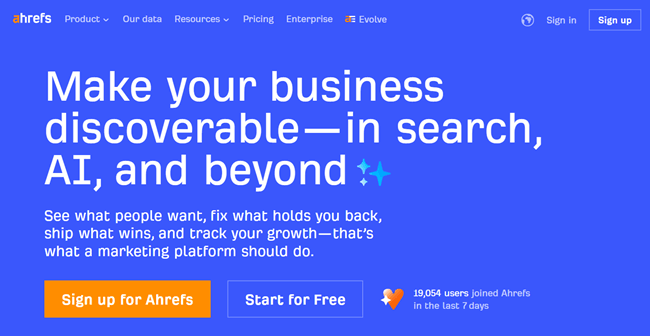
Ahrefs started as a simple backlink checker back in 2010, but it has grown into one of the most powerful SEO tools on the market.
For years, it was known as the absolute best tool for finding out who was linking to your website. Over time, however, Ahrefs evolved into a complete, all-in-one SEO machine. Today, it is deeply loved by hardcore link builders, niche site creators, and technical SEO experts who want clean, highly accurate data without any extra fluff.
If you want to know exactly why your competitors are ranking higher than you, Ahrefs is the tool that gives you the answers. It crawls the internet almost as fast as Google does, meaning its data is always fresh and accurate.
Many SEO experts love Ahrefs because its interface is clean and easy to use. You simply type a website or a keyword into the search bar, and it shows you everything you need to know. It helps you find thousands of keyword ideas, check who is linking to your website, and fix hidden technical errors that might be holding your site back.
Key Features of Ahrefs
Semrush (A Quick Overview)
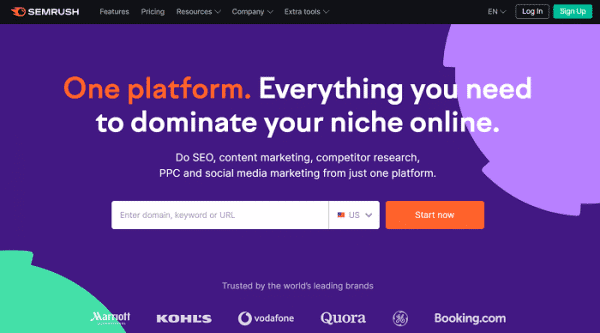
Semrush is like a Swiss Army knife for digital marketing. It launched in 2008 and quickly became a favorite among businesses and agencies looking to do everything in one place.
Instead of focusing just on SEO, Semrush decided to become a complete digital marketing toolkit. It offers tools for organic search, pay-per-click (PPC) advertising, social media scheduling, content writing, local SEO, and deep competitor analysis. If you want a platform that covers every single aspect of your online marketing strategy, Semrush is the heavy hitter of the group.
When it comes to keyword research, Semrush is an absolute giant. It holds the world’s largest keyword database, making it incredibly easy to find highly profitable, low-competition keywords that other tools miss.
Semrush also gives you a sneak peek into your competitors’ exact marketing strategies. You can see where their traffic comes from, which ads they are running, and which keywords drive the most buyers to them.
Key Features of Semrush
Moz (A Quick Overview)
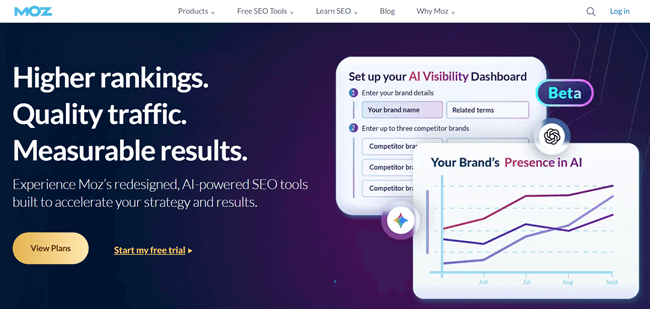
Moz is one of the oldest and most respected names in the SEO industry, starting all the way back in 2004. It actually began as a blog where SEO experts shared their knowledge. Today, Moz Pro is a highly trusted software designed to make SEO as simple and straightforward as possible.
If you are a beginner or a small business owner, Moz is incredibly friendly. It does not overwhelm you with complex charts and endless data. Instead, it focuses on the core tasks that actually move the needle.
Moz is best known for creating “Domain Authority,” a metric that almost everyone uses to gauge how strong a website is. It is a fantastic tool for tracking your daily rankings, understanding your page optimization, and cleaning up your backlink profile without any confusion.
Key Features of Moz
Ahrefs vs Semrush vs Moz: Who wins in 2026?
As AI reshapes search in 2026, choosing between Ahrefs, Semrush, and Moz is more challenging than ever.
Let’s break down their latest features, data accuracy, and overall value to reveal which SEO platform ultimately takes the crown.
1. Keyword Research: Which Tool Finds the Best Opportunities?
Keyword research is the foundation of any successful website. If you don’t know what words your customers are typing into Google, you cannot write content that they will find. You need a tool with a massive database and accurate difficulty scores.
Database Size and Accuracy
When it comes to raw size, Semrush is the undisputed king. Their Keyword Magic Tool holds a staggering database of over 27.9 billion keywords. Because the database is so massive, Semrush is incredible at finding super-long-tail, low-competition keywords that other tools simply miss.
Ahrefs has recently updated its database, which now contains 28.7 billion filtered keywords (and over 110 billion keywords ever seen) across 217 locations. It doesn’t just track Google. Ahrefs lets you run keyword research for YouTube, Amazon, Bing, Yahoo, and Baidu. If you are a video creator or an e-commerce seller, this multi-platform data is an absolute game-changer.
Moz has the smallest database by far, sitting at around 1.25 billion keywords. However, Moz focuses heavily on quality over quantity. Their Keyword Explorer is incredibly easy to read and offers a unique “Priority Score.” This score combines search volume, difficulty, and your organic click-through rate to tell you exactly which keywords are actually worth your time.
Keyword Difficulty (KD) Scores
All three tools give keywords a difficulty score from 1 to 100 to tell you how hard it will be to rank on the first page of Google.
- Ahrefs calculates keyword difficulty almost entirely based on the number of backlinks the top-ranking pages have. It is very predictable but sometimes misses the “content quality” aspect.
- Semrush uses a more complex formula that considers backlinks, the authority of the ranking domains, and the page’s actual content.
- Moz looks at the Domain Authority of the top 10 results. Many users find Moz’s difficulty scores very accurate for newer, weaker websites seeking easy targets.
Search Intent Features
Google wants to give users exactly what they are looking for. Do they want to buy something (Transactional intent) or do they just want to learn something (Informational intent)?
Semrush was the first tool to automatically label every single keyword with a “Search Intent” tag. Ahrefs recently added this feature as well. This saves you hours of manual work by instantly filtering thousands of keywords to show only those where people are ready to buy your product. Moz currently does not offer automatic search intent labelling.
Winner for Keyword Research: Semrush for sheer volume and data, but Ahrefs is a close second if you need YouTube or Amazon data.
2. Backlink Analysis: The Battle of the Link Indexes
Backlinks—links from other websites pointing to yours—are like votes of confidence. The more high-quality votes you have, the higher Google will rank you. Analyzing these links is a massive part of SEO.
So, which is better for backlink analysis, Ahrefs or Moz? Or does Semrush beat them both?
Index Size and Speed
For a long time, Ahrefs had the biggest and fastest link database. If you got a new backlink today, Ahrefs will usually find it by tomorrow.
However, Semrush has invested heavily in its link crawlers over the last few years. Today, Semrush boasts a database of over 43 trillion backlinks, while Ahrefs and Moz hover around similar massive numbers.
In real-world testing, both Ahrefs and Semrush find new backlinks incredibly fast. Moz is slightly slower to update its link index, but still highly reliable.
Proprietary Metrics: DA vs DR vs AS
Each tool has its own way of scoring a website’s strength based on its backlink profile. You will see these terms everywhere in the SEO industry:
- Moz Domain Authority: Moz’s Domain Authority (DA) predicts how well a site will rank based on multiple factors, including link quality and spam.
- Ahrefs Domain Rating: Ahrefs’ Domain Rating (DR) is a pure measure of link popularity. If you just want to know who has the most links, look at Ahrefs DR. If you want a broader look at trust, look at Moz DA.
- Semrush Authority Score (AS): Semrush considers link power, organic traffic, and spam factors to provide a well-balanced view of a website’s true strength.
Toxicity and Spam Checking
Not all links are good. Toxic, spammy links from shady websites can actually hurt your rankings and get you penalized by Google.
This is where Moz and Semrush shine. Moz is famous for its Spam Score, which gives any website a simple percentage rating indicating how spammy it looks. Semrush goes a step further with its Backlink Audit Tool. It scans all your links, highlights the dangerous ones, and even helps you create a “disavow” file to send to Google, asking them to ignore those bad links.
Surprisingly, Ahrefs refuses to build a toxic link tool. They argue that Google is smart enough to ignore bad links on its own, so you shouldn’t waste your time managing them. While true for most sites, many SEO professionals still prefer having a way to check for toxic attacks.
Winner for Backlink Analysis: Tie between Ahrefs and Semrush. Ahrefs has the cleanest interface for digging into link profiles, but Semrush offers the vital toxic link audit tool.
3. Technical SEO and Site Auditing
If your website is slow, has broken links, or blocks search engines from reading your pages, your great content will never rank. Technical site audits crawl your website exactly like Google does to find these hidden errors.
Crawl Depth and Speed
All three platforms offer excellent site auditing tools, but they handle the data differently. Ahrefs and Semrush can both crawl massive websites with hundreds of thousands of pages very quickly. Moz’s crawler is great, but it is better suited to smaller to medium-sized websites than to massive enterprise stores.
Ease of Fixing Errors
Finding errors is only half the battle; fixing them is the hard part.
- Semrush is the absolute best at this. When it finds a technical error (like a missing meta tag or a slow-loading JavaScript file), it explains exactly why it is a problem and gives you plain-English instructions on how to fix it. This is a lifesaver if you are not a web developer.
- Ahrefs gives you a “Health Score” out of 100. Its reports are highly detailed and visually beautiful, but the advice can feel a bit too technical for beginners.
- Moz sticks to the basics. It will alert you to major issues like broken 404 pages or duplicate content, but it won’t overwhelm you with hundreds of minor technical warnings.
Winner for Site Auditing: Semrush, largely because of how well it explains how to fix the problems it finds.
Is Semrush really worth the hype? 🤔
We put it to the ultimate test. See exactly what works (and what doesn’t) in our comprehensive, no-fluff breakdown.
👉 Read our full Semrush Review4. Rank Tracking: Monitoring Your Success
Once you optimize your website, you need to track your target keywords to see whether your rankings are actually improving.
Update Frequency
Rankings change every single day.
- Semrush updates your keyword rankings daily on all of its standard plans. You always know exactly where you stand.
- Moz updates your rankings once a week on its standard plans.
- Ahrefs is a bit stingy here. Depending on your plan, it might only update your rankings once a week or every few days. You have to pay extra for daily updates.
Local SEO Tracking
If you run a local business (like a plumbing company or a restaurant), you don’t care where you rank nationwide; you only care where you rank in your specific city or zip code.
Moz is historically famous for its local SEO features. However, Semrush has caught up and offers incredible hyper-local tracking, allowing you to track rankings down to the exact zip code. Ahrefs is much weaker in local SEO, focusing mostly on national and global search data.
Winner for Rank Tracking: Semrush for its daily updates and excellent local tracking.
5. Competitor Analysis: Spying on the Competition
Sometimes the fastest way to succeed is to look at what the winning team is doing and copy their strategy. All three tools let you spy on your competitors, but some go much deeper than others.
Traffic Estimation
If you type a competitor’s website into Moz, it will tell you what keywords they rank for, but it won’t give you a great estimate of their total monthly traffic.
If you type that same site into Ahrefs or Semrush, they will give you highly accurate estimates of how much organic traffic that site gets every month, and exactly which pages bring in the most visitors.
Semrush even goes a step further with its “Traffic Analytics” tool, estimating a competitor’s direct traffic, social media traffic, AI traffic, and paid ad traffic.
Content Gaps
One of the most powerful features in SEO is the “Gap Analysis.” This tool looks at your website and your competitor’s website and says, “Here are 50 keywords that your competitor is ranking for, but you are not.”
Ahrefs pioneered the Content Gap tool, and it remains incredibly easy and intuitive to use. You simply plug in three competitors, and it spits out a goldmine of topics you need to write about. Semrush has a nearly identical feature called the Keyword Gap tool, which is just as powerful. Moz does offer a basic keyword overlap tool, but it is not as robust.
Winner for Competitor Analysis: Semrush gives you the widest view of a competitor’s entire marketing strategy, while Ahrefs is slightly faster for finding quick content gaps.
Dominate Your Niche with Ahrefs
Tap into a massive 28.7 billion keyword database and the industry’s best backlink checker. Built for serious SEOs.
Get Ahrefs Today6. Ease of Use and User Interface
You are going to spend a lot of time staring at these tools. If the dashboard is confusing, you won’t use it.
- Moz: Moz wins the ease-of-use category hands down. It is the cleanest, least cluttered, and most beginner-friendly platform. It doesn’t overwhelm you with charts you don’t understand. If you want to log in, check your rankings, look at your DA, and log out, Moz is a dream to use.
- Ahrefs: Ahrefs strikes a great balance. It is incredibly data-dense, meaning there are numbers everywhere. But the layout is very logical. Once you spend a couple of days clicking around, it feels very intuitive. Their tooltips and tutorials are also top-notch.
- Semrush: Semrush can feel overwhelming. Because it includes tools for SEO, PPC, social media, and content marketing, the sidebar menu is absolutely massive. There is a steep learning curve, but once you master it, you realize you have a complete digital marketing agency at your fingertips.
7. Pricing Comparison & Value for Money
Budget is the deciding factor for most people. Let’s dive deep into the Semrush vs Ahrefs vs Moz pricing comparison.
Moz Pricing
Moz offers the lowest barrier to entry. They have a standard plan that starts at $49 per month (or you can upgrade to their standard Pro plan at $99/month for higher limits). The $49 plan is somewhat limited in reports, but it is a fantastic starting point for freelancers or single-site owners who just need the basics.
Ahrefs Pricing
Ahrefs starts at $108 per month for its Lite plan. However, Ahrefs recently introduced a controversial “credit-based” pricing model. Basically, every time you open a report, apply a filter, or click a button to view data, it costs you a “credit.” Your monthly plan gives you 500 credits. Many heavy users find they run out of credits quickly and incur overage fees.
Is Ahrefs’ credit system worth it compared to Semrush? If you run a small blog and only check things occasionally, yes, 500 credits is plenty. But if you are a heavy user doing deep research every day, the credit system can become very frustrating and expensive.
Semrush Pricing
Semrush is the most expensive entry-level option, with its Pro plan starting at $117.33 per month. However, there are no hidden data credits for viewing reports.
You can run hundreds of keyword searches a day without worrying about extra fees. Plus, you get the social media and paid ad tools included. Semrush only limits the number of “user seats” (how many people can log in at once) and the number of projects you can track simultaneously.
Winner for Pricing: Moz is best for tight budgets. Semrush offers the best overall value, as it includes unlimited report viewing and additional marketing tools.
Master SEO the Smart Way
Uncover the metrics that actually matter. Track your true Domain Authority and fix site errors with ease.
Start 7-Day Free Trial8. Pros and Cons Summary
If you are just skimming this article, here is the quick breakdown of what makes each tool great and where they fall short.
Ahrefs
Pros:
- Incredible multi-platform keyword research (YouTube, Amazon, etc.).
- The cleanest interface for deep backlink analysis.
- The famous Content Gap tool is highly intuitive.
- Top-tier educational blog and video tutorials.
Cons:
- The credit-based pricing model limits how much research you can do.
- No dedicated toxic link auditing tool.
- Rank tracking does not update daily on the base plan.
Semrush
Pros:
- The largest keyword database on the market (27.9 billion).
- All-in-one platform covering SEO, paid ads, and social media.
- Excellent site auditing with clear instructions on how to fix errors.
- No credit limits on viewing standard reports.
Cons:
- The highest starting price ($117.33/month).
- The interface can feel overwhelming for beginners due to so many features.
- Traffic estimates for very small websites can sometimes be inaccurate.
Moz
Pros:
- The most affordable entry-level plan ($49/month).
- Incredibly beginner-friendly and clean user interface.
- The creator of the trusted Domain Authority (DA) metric.
- Excellent tools for managing local business SEO.
Cons:
- The smallest keyword and link databases of the three tools.
- Lacks advanced competitor traffic analysis features.
- Rankings only update weekly on standard plans.
Final Verdict: Which SEO Tool Should You Choose?
So, after looking at all the data, which tool wins the Ahrefs vs Semrush vs Moz debate? The truth is, there is no single “best” tool—it depends entirely on who you are and what you need.
Best for Beginners and Small Local Businesses: Moz. If you are wondering what the best SEO tool for beginners, Moz or Semrush, the answer is Moz.
If you run a local brick-and-mortar store or you are a brand-new blogger trying to learn the ropes, Moz gives you exactly what you need without confusing you. The $49/month price point makes it an easy choice to get started with tracking rankings and building Domain Authority.
Best for Hardcore Link Builders and Niche Bloggers: Go with Ahrefs if your primary focus is link building, competitor backlink analysis, and ranking YouTube videos. The dashboard makes it really easy to sort through link data. Just watch out for their monthly credit limits so you don’t run out.
Best for Agencies, E-commerce, and All-in-One Marketers: Semrush. If you are weighing Ahrefs vs Semrush vs Moz for small business growth, Semrush is the clear winner.
While it costs a bit more upfront, you are getting an entire digital marketing team in a box. From the massive keyword database to the daily rank tracking, technical audits, social media management, and competitor spying, Semrush gives you the most actionable data to aggressively grow your website’s traffic.
The Ultimate All-in-One Suite
Supercharge your traffic with cutting-edge AI tools, deep competitor analysis, and complete content workflows.
Try Semrush for Free