The start of a new year provides a rare break for small business owners during the busy months. Sales cycles are reset. Customers are returning with renewed intent. Budgets are reopening. This small window provides business owners with an opportunity to step back and determine what needs to change.
New Year resolution ideas for small businesses are most effective when they focus on specific daily actions, rather than vague promises. Growth doesn’t mean to sell more products. It comes from choosing clear goals and supporting them with new tools and your changed habits.
Small businesses, home-grown businesses, and startups may face tight deadlines and limited resources. That reality changes how goals should be set—a small business owner can’t invest in several tools at once.
Your resolutions should be set according to your financial capacity. Make an effort to explore new money-making opportunities and expand your horizons.
In this guide, I cover practical New Year resolutions for small business owners to achieve steady growth.
| Disclosure: Your support helps keep the site running! We earn a referral fee for some of the services we recommend on this page. |
- Smart New Year Resolution Ideas for Small Business Growth
- 1. Set Clear Business Goals That Support Growth
- 2. Choose Fewer Goals With Clear Targets
- 3. Start a Blog
- 4. Break Annual Goals Into Monthly Actions
- 5. Build a Strong Online Presence With the Right Platform
- 6. Upgrade Your Hosting for Better Performance
- 7. Start or Improve Your Online Store This Year
- 8. Do competitor analysis
- 9. Focus on Customer Experience and Retention
- 10. Automate Daily Tasks to Reduce Manual Work
- 11. Improve Marketing Consistency Without Adding Pressure
- 12. Create ads
- 13. Run giveaways and contests
- 14. Talk to customers
- 15. Track Progress and Adjust Goals Throughout the Year
- Final thoughts
Smart New Year Resolution Ideas for Small Business Growth
Smart new year resolutions focus on actions that enhance your business visibility. Small businesses grow faster by improving websites, refining sales processes, and strengthening customer relationships.
Let’s get started.
1. Set Clear Business Goals That Support Growth
Start wth clear goals based on your last year’s growth. If not, you will waste time on tasks that don’t drive revenue or visibility.
Before setting goals, review the past year with numbers, not opinions. Look at:
- Monthly revenue
- Website traffic
- Conversion rate
- Repeat customers
- Top-selling products or services
This review highlights the sources of your business growth and the points at which progress stalled. If you run a home-based business, you may experience steady traffic but weak sales. A startup might see more sales without returning customers.
Write down three strengths and three weak areas. This list serves as the foundation for your new year business resolutions.
2. Choose Fewer Goals With Clear Targets
You will perform better with fewer goals. Choose three to five goals for the year. Each goal should be tied to a number.
Examples:
- Increase monthly revenue by 20%
- Reach 50,000 website visits per month
- Add 100 email subscribers per month
- Improve online store conversion rate by 2.5%
These goals set the stage for your daily actions. Without numbers, goals become meaningless.
3. Start a Blog
A blog is a powerful medium to reach more customers and promote your products. Starting a blog should be another resolution you make this New Year.
Do keyword research and publish niche articles to guide readers about your industry. Create listicles and how-to guides to attract visitors and persuade them to test your products.
Unlike promotional content, informative and in-depth posts can help you gain more backlinks and thus increase your website’s search visibility.
If possible, set up a unique affiliate program for your business and recruit agents to increase your sales. Prepare a competitive commission structure and offer discount coupons for top-performing affiliates so they can bring more referrals to your platform.
4. Break Annual Goals Into Monthly Actions
Annual goals seem far-fetched. Divide them into monthly actions to inspire you more effectively.
If your goal involves more traffic, monthly actions might include:
- Publish four blog posts
- Update current posts
- Improve site speed
- Run an SEO audit
- Build new backlinks
- Fix broken links
If the goal involves sales, monthly actions might include:
- Add new products
- Improve product descriptions
- Test the checkout flow
- Run limited-time offers
This structure provides clear direction for small business owners, home-based businesses, and startups on the next steps to take. Set daily and weekly goals to easily reach your targets.
5. Build a Strong Online Presence With the Right Platform
A secure and reliable website supports your business goals. Traffic, conversions, sales, and ranking – all connect to your site’s performance.
The best tool to create and manage websites:
- WordPress.com: Start at $4/mo

WordPress.com provides small businesses with a stable foundation for establishing an online presence. The platform handles hosting, updates, backups, and security, which removes your technical stress. Business owners can focus on content, products, and customer service without having to manage servers.
The page editor utilizes a block system that simplifies page creation. You can add text, images, buttons, and forms through customized blocks without needing to code.
WordPress.com offers a range of professional themes and plugins that work well on both mobile and desktop devices, enabling businesses to decorate and optimize their pages seamlessly.
Content management with WordPress.com is easy, even for beginners. You can schedule and publish blog posts, create pages, and respond to comments from one dashboard. Built-in free tools support basic search visibility and site analytics.
WordPress.com’s premium plans give you more control. Premium users will have unlimited customization options, a free domain, access to all premium themes, and deeper analytics. Their Commerce plan will also help you set up a WooCommerce store with eCommerce tools and sell products globally.
6. Upgrade Your Hosting for Better Performance
Some small businesses choose to run on a non-WordPress.com platform. In those cases, hosting plays a significant role in site speed and reliability. A slow or unstable site can negatively impact traffic, sales, and customer trust.
Best web host to create websites:
- Pressable: Start at $20.83/mo
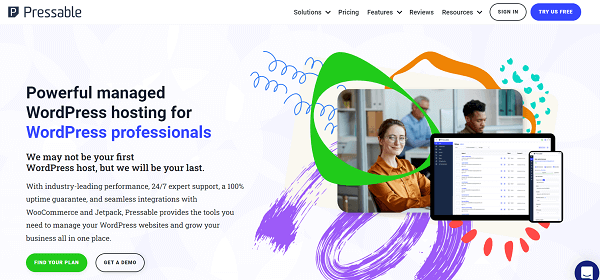
Pressable offers managed WordPress hosting designed for optimal performance and growth. It handles security, daily backups, and server-level optimization, saving you time. You can add collaborators with specific user privileges to manage billing, optimization, and other parts.
This platform is ideal for growing businesses, online stores, and content-driven websites. Pressable hosts your websites in a cloud-based hosting environment with a 100% uptime guarantee, professional email accounts, and 24/7 fast customer support.
A strong New Year’s resolution for non–WordPress.com users could involve moving to a fast web hosting service that supports growth goals rather than limiting them. Pressable is a great option in this category.
7. Start or Improve Your Online Store This Year
Selling online remains one of the strongest New Year’s resolution ideas for small business owners. An online store enables your business to reach customers beyond local boundaries and accept orders at any time. This creates steady opportunities for revenue without relying on third-party platforms.
Best tool to create online stores:
- WooCommerce: Free

WooCommerce works smoothly with WordPress.com plans that support plugins. It allows businesses to sell physical products, digital downloads, or services from a single dashboard. Setting up products feels familiar, similar to creating a page or post. Payments, orders, and inventory stay easy to manage without technical setup.
As your store grows, WooCommerce Marketplace provides extensions that support shipping, payments, product options, and store management. These tools let you add features based on real needs, not guesses.
A practical, store-focused resolution may include launching your first products, refining product descriptions, adding clear images, or streamlining checkout steps. Small improvements across the year can lead to steady sales growth.
8. Do competitor analysis
Monitor your competitors to discover their traffic generation strategies, steal backlinks, and find new opportunities. Learn what keywords bring the most traffic to them and at what positions they rank on Google search.
Prepare more detailed content on the same topic and contact rival’s referring domains to get backlinks from them. This way, you can outrank competitors and generate more sales.
Best SEO tool for competitor analysis:
- Semrush: Start at $165.17/mo (Semrush One)

Semrush is an all-in-one digital marketing platform for content research, link building, traffic analysis, SEO audit, and more. It will tell you what keywords bring traffic to any website and what users are searching in your niche industry. This may lead you to create new content or products that have high demand.
9. Focus on Customer Experience and Retention
Customer experience plays a direct role in business growth. It costs more to acquire new customers than to retain existing customers. A strong New Year’s resolution should focus on keeping buyers engaged after the first purchase.
A smooth website browsing experience builds trust. Pages should load fast, product details should stay clear, and checkout steps should stay short. You should answer user queries and solve customer complaints fast.
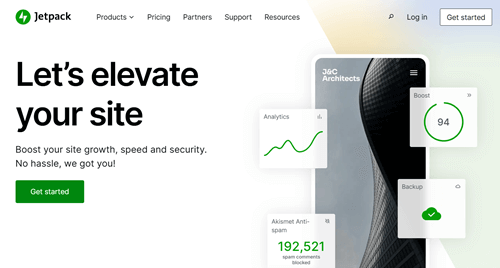
Jetpack is a great tool to enhance your page speed, market products, and strengthen your website security. It will also help you to craft compelling content, run automated backups, and monitor your site performance. This all-rounder WordPress plugin can convert your blog posts into newsletters, attracting more customers.
Communication is another part to enhance your client experience. Send order updates, follow-up emails, and new feature notifications in a timely manner. Small businesses that respond quickly see higher repeat purchase rates.
10. Automate Daily Tasks to Reduce Manual Work
Manual work slows small businesses as they grow. Repeating the same tasks each day takes focus away from sales, marketing, and customer care. A smart New Year’s resolution focuses on automation that reduces routine effort.
WordPress-based businesses already have access to useful automation options. AI-enabled chat applications can send instant replies. Inventory updates can run automatically after each sale. This helps you track available stocks easily.
Blog posts can go live on specific dates, twice or thrice per week. Email updates should connect to new posts, product launches, or latest offers. This keeps communication active without daily involvement.
A practical automation goal could involve identifying three repeated tasks and setting systems to handle them. This approach supports growth without adding pressure.
11. Improve Marketing Consistency Without Adding Pressure
Some small business owners stop marketing during busy periods, which slows growth. Instead, you should promote products regularly to remain active and get user attention.
Your website should act as the main marketing hub. Blog posts, product updates, and announcements should live there first. From there, you can share links across email and social media channels. This approach keeps your content organized and searchable.
Content does not need to be published daily. One useful post each week or two can support steady traffic. Topics can include product guides, customer questions, or updates related to your business niche.
Update your posts frequently by adding current information and new keywords. This is useful to improve your search rankings and niche authority score.
Send regular email newsletters to your subscribers. A short newsletter once or twice a month keeps your audience informed and engaged.
Display sign-up forms in your blog posts and offer some incentives like a free e-book or a downloadable sheet as a gift to new subscribers. As a result, your email list will grow gradually.
12. Create ads
Create ads to spread awareness about your products and services. There are several places, like Google, Bing, and social media sites, where you can publish ads to attract new clients. They help you to reach audiences around the world in quick moments and generate guaranteed results.
Many SEO platforms like Semrush can analyze ads your competitors have been running for the past few years, collect their top-performing keywords, and evaluate their performance with downloadable reports.
Optimize your ads with relevant keywords and set a target audience by geographical location, age group, gender, etc. Monitor ad performance to track results and make changes, if any, to improve your click-through rates.
13. Run giveaways and contests
Running giveaways is widely used to build email lists and increase your social media followers. Ask visitors to share your content and follow you on social sites to win attractive prizes. It could be a software license, an e-book, or something similar.
Promote contests through your social media pages and email newsletters to reach more audiences. Black Friday is one of the best seasons to run giveaways. But you can run it any time for anniversary celebrations, New Year special deals, etc.
The best tool to create giveaways:
- RafflePress: Starts at $79/yr (14-day money-back guarantee)
RafflePress is an incredible giveaway plugin for WordPress. It offers stunning, responsive templates to create giveaways in a few moments.
You can also build a viral giveaway from scratch using the drag-and-drop builder and customization settings. Integrated with all leading marketing tools and social sites, it provides unlimited options to maximize your social media following and boost shares.
14. Talk to customers
Speak with your customers to understand their requirements and what they expect from you. Send them emails or ask them to leave suggestions through feedback forms. You can also create surveys and polls to get ideas about the next product developments and the most demanding features.
Live chat is another way to talk to your website visitors. It lets you collect user queries and contact information to send updates about their requests. Chatting bots also help you to divert visitors to relevant product pages and customer support executives for further assistance.
15. Track Progress and Adjust Goals Throughout the Year
Tracking progress keeps your New Year resolutions active throughout the year. Your business will grow faster when you review results and make changes based on real data.
Start with a short monthly review. Google Analytics and Jetpack provide access to daily traffic trends, user locations, referral channels, and performance insights.
Analyze product orders, form submissions, and revenue generated for the period. This helps you identify which campaign works best for you and which does not. Change strategies and posting schedules to improve results.
Final thoughts
New Year resolution ideas for small businesses only work when they convert into daily actions. Big projects lose their value when they stay on paper. Small steps, repeated over weeks and months, lead to real business growth.
Focus on systems and real data. Clear website setup, reliable hosting, and simple workflows reduce your workload. When tasks seem easy, progress continues without additional effort. Tools like WordPress.com, WooCommerce, Jetpack, and Pressable support this approach by handling technical tasks in the background.
Choose one or two priorities at a time. A design change, an online store launch, or better customer service can move your business forward. Monitor your growth and make changes accordingly. This habit helps you achieve goals in step by steps.
Read Is Snapchat Still Good for Business? Here’s the Real Answer